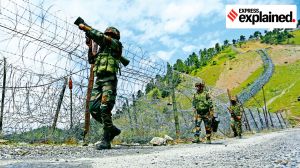
| Dear Express Explained reader, The anger and grief at the killings of innocent tourists in Pahalgam is being slowly replaced, even in the minds of ordinary Indians, by the renewed realisation that support and encouragement to Islamist terrorism and terrorists is existential to the Pakistan Army, and an essential aspect and feature of Pakistani statecraft. There will be no easy or quick escape from this situation for India, unless some structural aspects of the Pakistani state change, and that country fundamentally revises its understanding of its own purpose and existence in the global community, and of its relationship with India. General Asim Munir, the most powerful man in Pakistan at a time when its civilian government is probably among the weakest it has ever been, exemplifies more than most of his predecessors the way the Pakistan military thinks of its role and duty. He is the son of an imam, the product of an Islamic seminary, a man who has memorised the Quran, and who switches effortlessly between Urdu and classical Arabic while giving inflammatory speeches about how Muslims and Hindus are two different civilisations that can never make peace with each other. Do read Shubhajit Roy’s profile of the jihadist chief of the Pakistan Army. The Line of Control has been lit up by shelling by the Pak Army almost every night since the April 22 terrorist attack in Pahalgam, and the calibrated Indian response. This is the most intensive breakdown of the ceasefire agreement between the two countries since the Indian and Pakistani Directorates General of Military Operations (DGMOs) renewed it through a joint statement in February 2021. Bashir Ali Abbas explained the nature of the ceasefire – more of an “understanding” than an agreement – at the LoC, why and how it evolved, why the Pak Army insists on violating it periodically, and why these violations are in fact intrinsic to the ceasefire mechanism itself. The central government this week announced that the upcoming Census exercise will include an enumeration of castes, bowing to a several decades-old demand and reversing the position that it had formally articulated in Parliament four years ago. Shyamlal Yadav summed up the broad story and history of the demands and arguments over carrying out a headcount of the very large number of caste groups in India, placing them in their political context, and explaining why the yielding by the government is such an important development. Separately, Lalmani Verma recalled the last time caste data of this kind were collected, even though they were ultimately never published. Finally, I would like to flag to you this week something that you will hear a lot about in the coming weeks as the country grinds through the summer and longs for the rains to arrive – monsoon forecasting. Alind Chauhan wrote about the evolution of the scientific methodology by which the India Meteorological Department makes its forecasts of the southwest monsoon, a complex and crucial task that has an enormous bearing on policy-making, and in which it has made steady progress over the decades. Thank you for reading The Indian Express Explained. There is a large body of explanatory journalism, on a wide range of topics, on our website, and I hope you will check it out soon if you haven’t already. Also, many of our best explainers are now behind a paywall, so I hope you will subscribe. Sincerely, Monojit | 





No comments:
Post a Comment