| |
| 
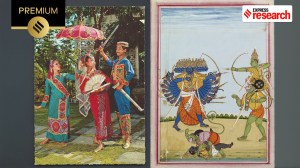
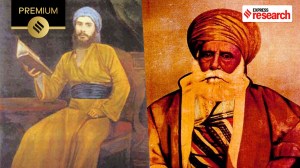
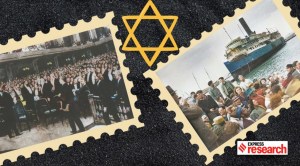
Dear reader, We know that Calcutta being the first colonial capital of the British in India, had for long been a hub of traders, travellers and entrepreneurs from diverse communities across the world. Among them was a thriving community of Jews who established notable institutions in the city. Till about the 1940s, the Jewish community of Calcutta comprised approximately 5,000 people. But colonialism and circumstances reduced Calcutta’s Jewry to a mere handful. Today, just about 20 odd members of the community, aged 60 and above, live in the city. Though a disappearing community, their remarkable history can be found in institutions like a few synagogues, Jewish schools, and a cemetery. Our story this week narrates the fascinating story of the Jews in Calcutta and their slow descent into oblivion. The first Jews to arrive in Calcutta belonged to the Baghdadi community, one of the three Jewish communities in India. They arrived in several waves beginning in 1798. Gradually, they established a thriving commercial network stretching from West to East Asia, extending across all the major ports such as Basra, Bombay, Calcutta, Singapore, and Hong Kong. The final wave of Jewish migration happened in the mid-20th century, driven in part by the Ottoman Empire’s policy of compulsory recruitment of all males in the army ahead of World War I and later due to the horrors of the Holocaust during World War II. Although initially they followed a strict Baghdadi culture, including speaking in Arabic and wearing traditional attire, things changed after the mutiny of 1857. It propelled them to discard their Middle Eastern cultural roots and seek European status and identity. Consequently, they would begin to imitate the British more and shed off their Indianness. It was a fruitless effort though, for they soon found themselves alienated from the British. The Partition of 1947 further deepened their crisis and the formation of Israel a year later led to them leaving the country in large numbers. Our other story travels further to the Southeast Asian country of Philippines, where surprisingly the Ramayana has for centuries been revered by a Muslim ethnic group called the Maranaos. Rhodora G Magan, associate professor of Literature and Communication at Cebu Technological University, Philippines, in a recently published research paper titled Perception and Visibility of the State: The Ramayan of the Maranao: Rethinking Aquapelagos in the Philippines’ Sulu Sea (Shima Journal, March 2025), unravels the complex ways in which the Maranaos adapted the Ramayana for their survival. We interviewed Professor Magan to find out more about the history of the Maranaos and the role played by the Ramayana as they sought to build their own economic and cultural identity. Wishing you a pleasant weekend ahead. Sincerely, Adrija Roychowdhury | | | |
| |
| |
| |




No comments:
Post a Comment