Search This Blog

Sunday, 12 April 2026

Week in Review

Welcome to the United Nations
View in browser
Click 'Download images' to view images
UN News
Global perspective Human stories
Week in Review 11 April 2026
Middle East conflict: UN announces peace envoy, humanitarian task force

As hopes grew in Iran over the fragile US ceasefire deal announced on Monday, there was no respite for the people of Lebanon, with Israel launching its most intense bombardment of the war-ravaged country in decades on Wednesday, killing hundreds, including children.

We had key interviews with two frontline UN staffers who bore witness to the dozens of strikes that day and the growing humanitarian crisis across the country. 

Our live pages each day brought you all the main developments from the Security Council and wider region, including the crisis facing the global economy as Iran continues to prevent ships passing through the Strait of Hormuz.

We continued reporting on other humanitarian hotspots, including Sudan, Cuba and Ukraine.

For some relief from the horrors on Earth, we also asked UN advocate for Space, the great Brian Cox, to consider the birth of a new optimistic era as the Artemis astronauts make their way home, and as the World Cup looms, we highlight the power of sport for development.  


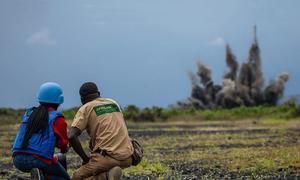
Mine action in the Democratic Republic of the Congo.
Deminers race to keep up with military technology

In conflict zones where new technologies are making landmines more dangerous, deminers must innovate at the same pace to avoid being left behind, a leading UN mines expert has told UN News

Read more
Peace and Security
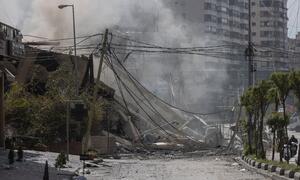
A heavily damaged and collapsed building in Beirut, Lebanon, with smoke rising from the rubble following airstrikes on March 12, 2026.
Lebanon situation ‘critical’, senior UN official warns

The ceasefire between the US and Iran has brought no respite to civilians in Lebanon, where deadly Israeli strikes intensified across the country on Wednesday, dramatically worsening the humanitarian situation. 

Repeated escalations in violence over recent weeks have significantly increased humanitarian needs, raising concerns about whether aid agencies can keep up with demand.

Blerta Aliko, the senior UN Development Programme official in Lebanon, was in the middle of updating UN News’s Ezzat El-Ferri, when heavy bombing began near her location in Beirut.

Later, speaking from the safety of the basement at UN House, Ms. Aliko said the situation had now become critical.

Read more
UN Interviews
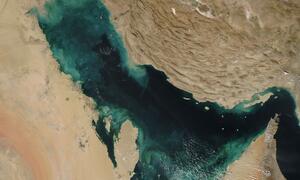
A satellite image from NASA's Aqua satellite shows the Persian Gulf, with tan and beige desert landmasses on either side and swirling patterns of green, blue, and tan in the water.
Iran ceasefire raises hopes for reopening key Strait of Hormuz

The announcement of a shaky two-week ceasefire between the US and Iran will, it is hoped, lead to the opening of the strategically important Strait of Hormuz, a vital waterway through which one fifth of the world’s oil and gas passes.

Read more
Peace and Security
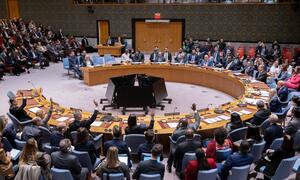
A wide-angle photograph of the United Nations Security Council chamber showing member states meeting to discuss the situation in the Middle East, with several delegates raising their hands.
Security Council: Russia and China veto resolution on Strait of Hormuz

The UN Security Council has failed to adopt a resolution aiming to boost security in the Strait of Hormuz as the critical shipping corridor remains largely closed to global trade and the transport of humanitarian aid, with war continuing to rage across the region. 

Read more
Peace and Security
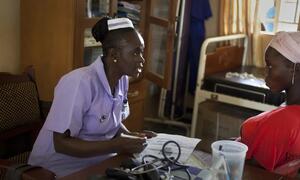
An African nurse in a purple uniform consults with a female patient wearing a pink headscarf in a clinic.
From misdiagnosis to medical bias: Why women are living longer but not better

For 25 years, the world has made significant progress in advancing women’s right to health, particularly in sexual and reproductive care. Women are living longer than ever before – but they are not living better.

Read more
Health
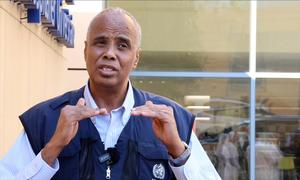
Dr Abdinasir Abubakar, Lebanon Representative, World Health Organization
Deadly Lebanon strikes overwhelm entire health system, as casualties surge

A massive wave of Israeli airstrikes struck Lebanon on Wednesday – despite the US-Iran ceasefire declared hours earlier – killing 254 people and injuring 1,165 others, according to local authorities. 

Strikes hit densely populated areas, including Beirut, with no warning, leaving many still trapped under rubble. 

Hospitals are overwhelmed, facing mass casualties and critical shortages of supplies. The UN World Health Organization is working tirelessly to provide support across the country, while dozens of medical workers have been killed and injured in recent weeks. 

UN News’ Nancy Sarkis spoke on Thursday to the WHO’s Representative in Lebanon, Dr. Abdinasir Abubakar, who witnessed 10 different strikes on Beirut during the horrifying bombardment.  

Read more
UN Interviews
Professor Brian Cox, an English physicist and musician, smiling while giving a presentation on stage with a large screen behind him.
New era for space dawns as Artemis astronauts return

After a 10-day journey around the far side of the Moon, the four astronauts on NASA’s Artemis II mission are set to splash down in the Pacific Ocean late on Friday. 

Read more
Peace and Security
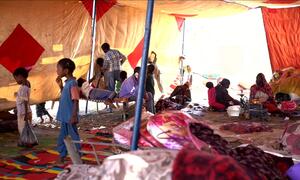
Inside Abu Al Naja camp in Sudan, displaced families, including women and children, rest and move about under large tent structures, highlighting the humanitarian crisis caused by ongoing conflict.
Sudan: 14 million displaced; hunger and attacks on health continue as war enters fourth year

As Sudan approaches the third anniversary of a brutal civil war, millions remain displaced and hungry while the health system lies in ruins, with no end to the violence in sight, UN agencies said on Friday.

Read more
Peace and Security
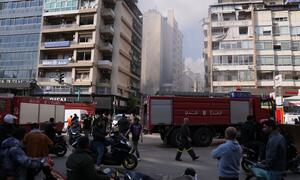
Emergency response vehicles and civilians gather on a Beirut street amidst smoke and damaged buildings following airstrikes.
Lebanon airstrike casualties ‘still under the rubble’ as ambulances, hospitals face new threats

With Lebanon still reeling from Israel’s devastating airstrikes on 8 April, UN humanitarians reported new fears of attacks on ambulances and looming food shortages in the south of the country on Friday.

Read more
Peace and Security
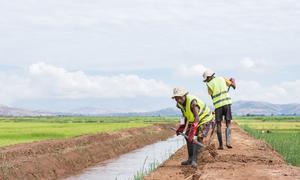
Two workers wearing safety vests and hats work on a dirt path alongside an irrigation canal in a green agricultural field in Ambondromisotra, Madagascar, as part of the HIMO project by the ILO.
Development finance gap risks reversing decades of progress

Global fragmentation, deepening geopolitical tensions and conflicts are putting decades of development progress at risk, the UN warned in a report published on Thursday - calling for stepping up investment to meet internationally agreed goals. 

Read more
Economic Development
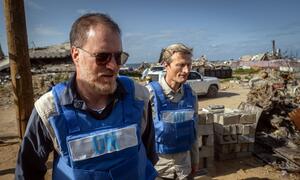
Shaun Hughes, WFP country director in Gaza, wearing a blue UN vest and sunglasses, walking through a site of destruction and rubble.
Over 1,000 humanitarians have been killed in three years, Security Council hears

At least 326 humanitarians were killed in the line of duty across 21 countries during 2025, bringing the total killed over three years to over 1,010. The International Red Cross warned the Security Council on Wednesday that “we are losing our humanity in war.”

Read more
Humanitarian Aid
UN logo white
facebook twitter youtube soundcloud
COPYRIGHT    |    FAQ    |    FRAUD ALERT    |    PRIVACY NOTICE    |    TERMS OF USE
Unsubscribe    |    Update preferences

No comments:

Post a Comment