

Why Great Marketing Teams Run Bad CampaignsIssue 62 : A Venture Unlocked × SurgeGrowth deep-dive into the creative production bottleneck killing performance marketing
This issue is produced in collaboration with SurgeGrowth, an AI video creation and marketing workflow platform. Research and editorial perspective are mine - Vaibhav and Avirup from the SurgeGrowth team share their ground-level view from Section 06 onwards.
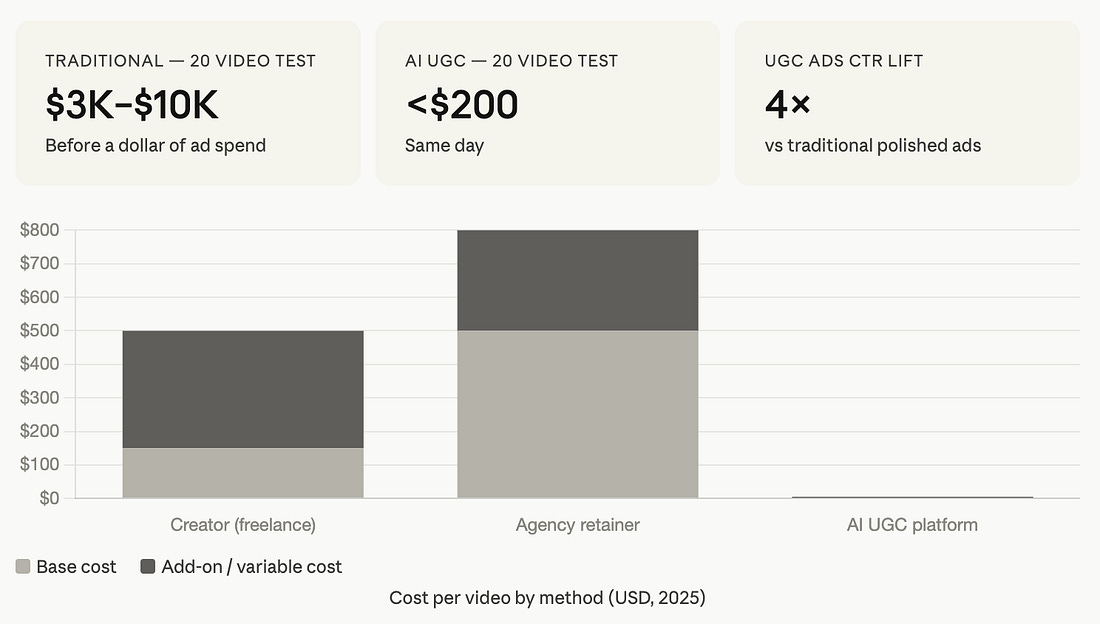
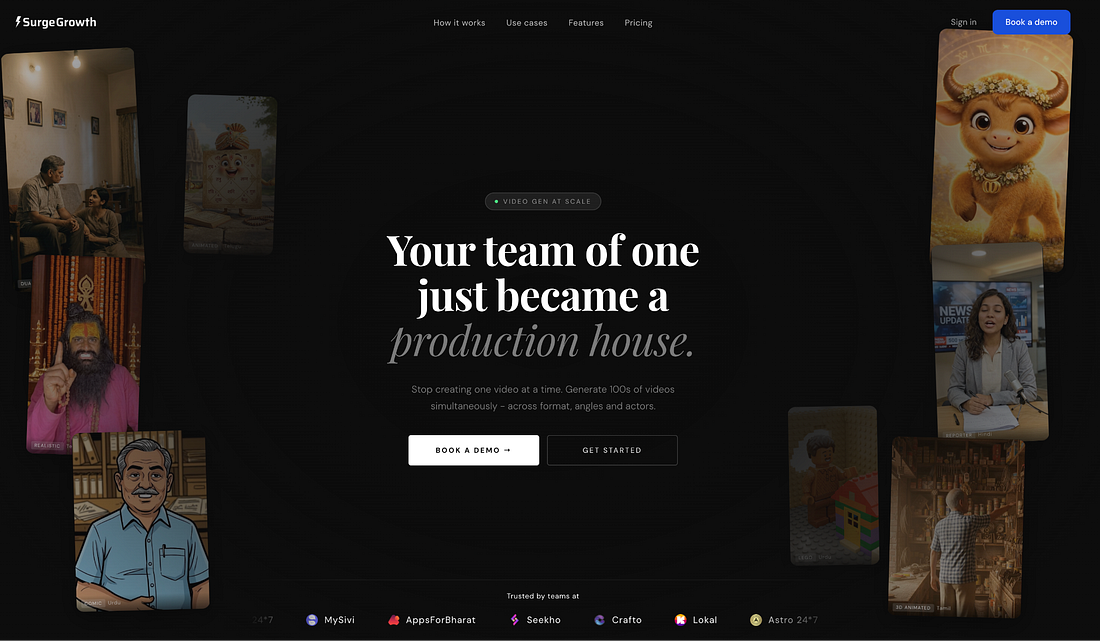
Section 01 - The Problem Nobody Talks About in Modern Marketing Workflows Most marketing post-mortems blame the wrong thing. The budget was fine. The targeting was solid. The audience was right. But the campaign underperformed, and somewhere in the debrief, someone said “we need better creatives” and everyone nodded and moved on. What nobody said out loud: we needed more creatives, faster, and we had no way to make that happen. This is the problem that sits underneath a lot of modern marketing failure. Not strategy, Not spend, Production throughput. Here is what the creative pipeline actually looks like for most marketing teams today. You have an idea for an ad. You brief a creator or an agency. You negotiate. You wait for the shoot. You review a draft. You give feedback. You wait for revisions. You clear licensing. You upload the final asset. By the time it is live, the trend has moved, the algorithm has shifted, or your competitor has already tested ten variations of the same idea and found the winner. The irony is that the platforms have made this worse, not better. Meta, YouTube, and TikTok now reward creative variety directly. More angles, more hooks, more formats mean faster signal on what converts. The algorithm punishes fatigue. Which means the volume of content a marketing team needs to produce to compete has gone up, while the time available to produce it has stayed the same. Most teams respond to this by doing less running fewer variations, scaling the one or two creatives that seem to work, and hoping for the best. That is not a content strategy. That is a production constraint dressed up as one. Curious how Surge Growth is solving this? Section 02 - How Big Is This Bottleneck, Really? Let us put a number on it. A single UGC-style video from a freelance creator costs between $150 and $500 in 2025. If you want to run a proper creative test 20 variations with different hooks, angles, and formats you are looking at $3,000 to $10,000 before a dollar of ad spend. That is just to find your winner. Most teams do not run 20 variations. They run three, pick the one that looks best, and scale it. When performance drops and it will they start the cycle again.
The math does not get better at scale. A team running campaigns across five product lines, in three languages, across Meta and YouTube, would theoretically need 50–100 fresh creatives a month to stay competitive. At $200 per video, that is $10,000–$20,000 a month. Just in production. Most growth teams do not have that. So they do not test. And then they wonder why their ROAS is dropping.
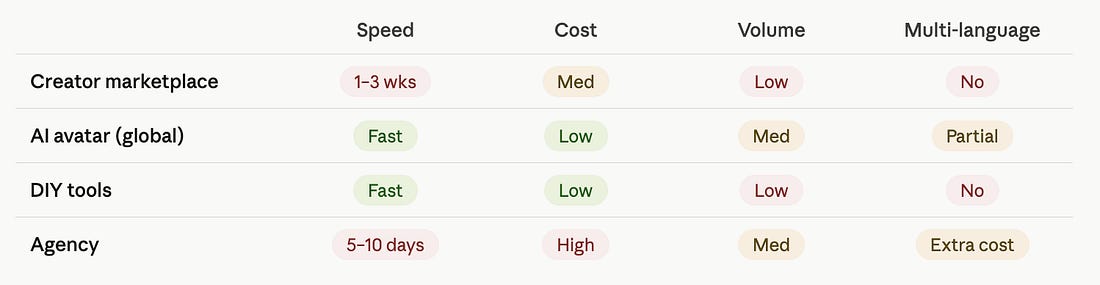
Meanwhile, the performance case for UGC is not in question. UGC-style ads deliver 4× higher click-through rates than traditional polished ads. Conversion lifts of 161% have been documented on e-commerce product pages. 82% of consumers say they are more likely to purchase from a brand that features UGC in its marketing. The format works. The production model is broken. Section 03 - What Growth Teams Globally Are Doing Right Now (And Why It’s Not Enough) There is no shortage of workarounds. The problem is that each one solves one part of the problem and breaks everywhere else. Creator marketplaces : platforms like Billo or Insense , reduce coordination overhead. You post a brief, creators apply, you pick, they shoot. Better than going direct, but still slow. A typical batch takes one to three weeks. You are still paying per asset. And if you need the same video in five languages, you are starting the process five times. Global AI avatar platforms : Synthesia, HeyGen, D-ID are strong for talking-head content and corporate video. But they are not built for performance ad formats. They require significant creative direction to produce something that actually converts. And for marketing teams outside the US and Western Europe, localisation is an afterthought, not a core feature. DIY with CapCut or InVideo gives you execution tools, not intelligence. You can edit fast. But there is no signal about what your competitors are running, no bulk variation engine, no way to go from competitor ad to your version in a single workflow. Agencies are the highest quality option and the most expensive. Monthly retainers in most markets start at $1,500–5,000, plus per-video costs on top. Minimum turnaround of five to ten business days per batch. Not designed for the test-fast-fail-fast cadence that modern performance marketing demands.
The pattern across all of these is consistent: each solution solves one dimension - speed, or cost, or quality and fails on the others. None close the full loop from insight to production to deployment at the cadence modern marketing actually demands. Section 04 - The Market Is Moving, Here’s What the Numbers Say The Venture Capital signal is clear. Synthesia raised at a $4 billion valuation in January 2026, nearly doubling from a year earlier, with ARR growing from $88M to $146M in 2025. HeyGen hit $95M ARR by September 2025, up from $35M the year before. Runway raised $308M at a $3 billion valuation. These are not early bets on a speculative category. These are growth-stage investments in infrastructure that is already being used at scale.
The broader UGC platform market which includes how brands collect, manage, and deploy user-generated content is an even larger number. $7.1 billion in 2025, projected at $64 billion by 2034 at a 28.8% CAGR. The segment that automates the creation side of that market, rather than just the distribution side, is still early. That gap is where the current wave of AI creative tools is building. The platform-side dynamic is accelerating this further. Meta’s algorithm now directly rewards creative diversity. Teams running more variations get more efficient delivery. This has made creative throughput a performance variable in the truest sense not just a production consideration. Section 05 - Where Today’s AI Creative & Workflow Automation Tools Fall Short for Marketing Teams The AI video tools that exist today are impressive in isolation. The problem is they are not built for how marketing teams actually work. Here is where they break down in practice. Character and voice consistency is the first failure. Most platforms generate videos where the same “character” looks slightly different from one video to the next - different skin tone, different facial structure, slightly different voice cadence. For a brand running 50 ads a month, this is not a cosmetic issue. It breaks the continuity that makes a spokesperson recognisable and trusted over time. Workflow fragmentation is the second. A typical AI creative workflow today looks like this: write a script in a doc, generate a voiceover in one tool, generate visuals in another, merge them in a third, add subtitles in a fourth, export and manually upload to Meta Ads. Each handoff is a point of failure, a version control problem, and a time cost. None of the major global platforms close this loop end to end. Multi-language iteration is the third and most structurally broken. Generating a video in English is straightforward. Generating the same video in six languages with appropriate pacing, cultural tone, and platform-specific formatting that requires starting from scratch in most tools. There is no concept of a “language variant” that inherits all the base creative decisions and just swaps the language layer. Speed of iteration is the fourth. Performance marketing runs on weekly or sometimes daily creative refresh cycles. Most AI video platforms are still oriented around a produce-and-done model, not a test-iterate-scale model. When a hook stops working, the team needs a new batch in hours, not days. And finally, competitive intelligence is almost entirely absent. The most useful thing a performance marketer can do before making a creative decision is understand what is already working in their category. Almost no AI creative tool surfaces this natively. The result is that AI video tools have reduced the cost of production without meaningfully reducing the time or skill required to operate the workflow. That is a cost saving, not a throughput solution. The real unlock is when the entire workflow - from what to make, to making it, to getting it live - collapses into a single system. Section 06 - SurgeGrowth’s Bet Vaibhav & Avirup, SurgeGrowth
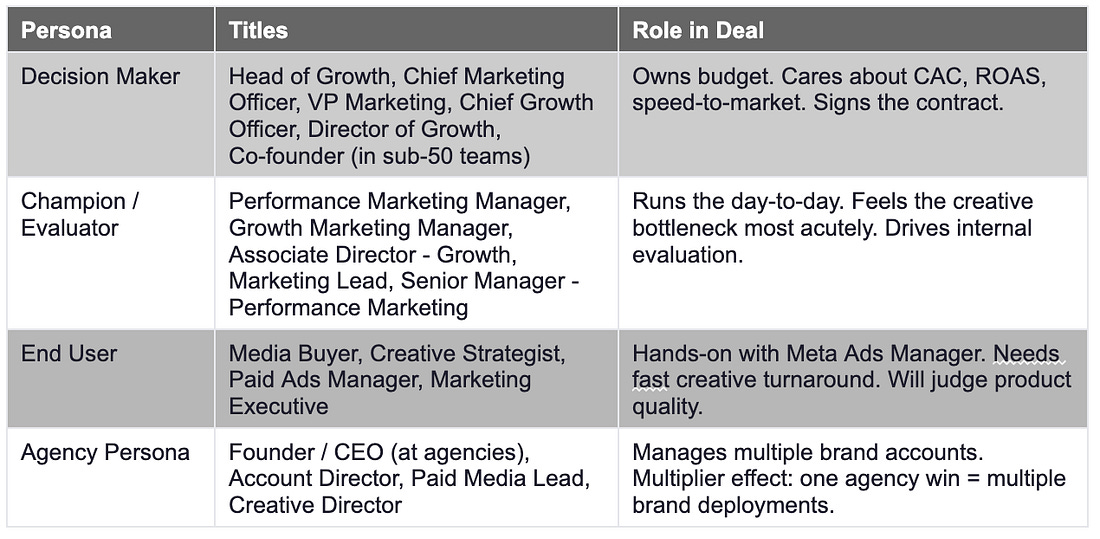
I put the obvious question to Avirup first: who is actually buying this? His answer was more precise than I expected. Buyer Personas & Job TitlesOur outbound targets three distinct personas. The decision-maker signs off on budget, the champion evaluates and advocates internally, and the end-user is the person who will use SurgeGrowth daily.
The buyer and the user are different people. On the buyer side - the person who signs off on budget , you are typically looking at a Head of Growth, CMO, VP Marketing, or a co-founder in a sub-50-person team. They care about CAC, ROAS, and speed to market. On the champion side - the person who evaluates the product internally and advocates for it - it is usually a Performance Marketing Manager or Growth Marketing Lead. They are the ones who feel the creative bottleneck most acutely and drive the internal evaluation. The end user - the person who opens the platform every day - is the media buyer, creative strategist, or paid ads manager who needs fast creative turnaround and will judge the product on output quality alone. Agencies add a fourth layer. The decision-maker at an agency is typically a founder or account director managing multiple brand accounts. The multiplier effect is real: one agency that adopts the platform deploys it across their entire client base. “The buyer and the user are different people. They have different problems and different definitions of success.” A growth lead buys on the promise of more creative output at lower cost. The creative team uses it to stop doing the parts of their job they hate - the repetitive variations, the format resizing, the language iterations. When both problems get solved simultaneously, something interesting happens. “Once brands have clarity on their marketing angle, they start churning thousands of AI videos every month - without our support.” Crafto, one of their customers, generates 1,300 videos every month on the platform. Not as a test. As their standard operating cadence. On the agency side, the pattern is different. In-house teams arrive with consistent brand guidelines and clear weekly targets - “we want 70 to 90 videos a week.” Agencies are less predictable. Their usage depends on client demand. But when the platform clicks - when they start generating AI ads and tracking competitors for most of their clients - they become power users almost overnight. As for where this goes: “We can focus on the workflow layer.” Not just a video generation tool, not a feature inside a larger platform. A system that owns the end-to-end marketing workflow - from what to make, to making it, to measuring what worked. Section 07 - What This Looks Like in Practice Numbers are easier to trust when they belong to real companies.
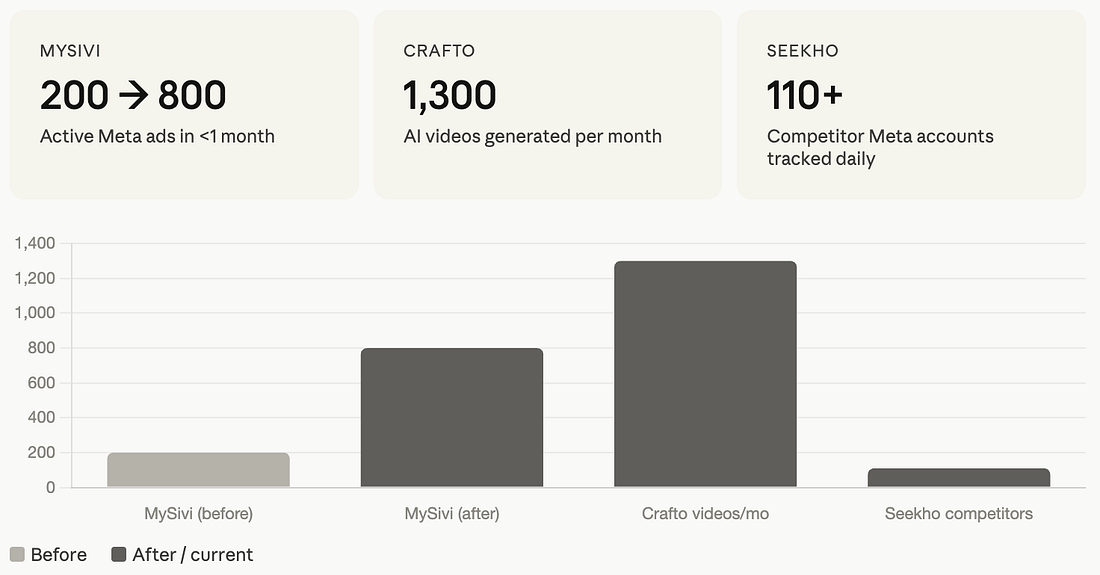
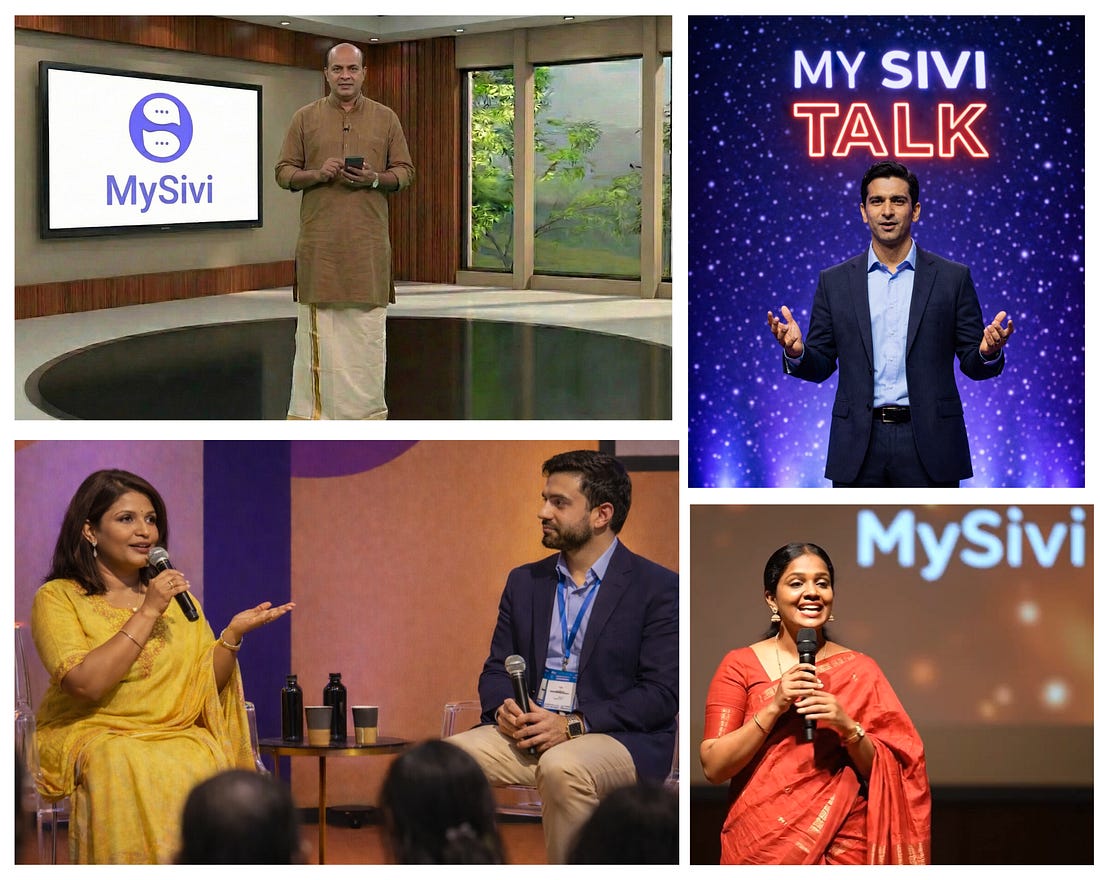
Scaling active ads: MySivi reached INR 100 crore in revenue with Meta as their primary acquisition channel. 90% of the videos running those campaigns were generated on SurgeGrowth. In under a month, they scaled their active Meta ads from 200 to 800. That is not a creative refresh. That is a structural change in how the team operates.
High-volume creative testing: Crafto’s number tells a different story - one about what happens when the production bottleneck disappears entirely. 1,300 AI videos a month is not a campaign. It is a creative testing operation. The volume that was previously out of reach - financially and logistically - becomes the default mode of working.
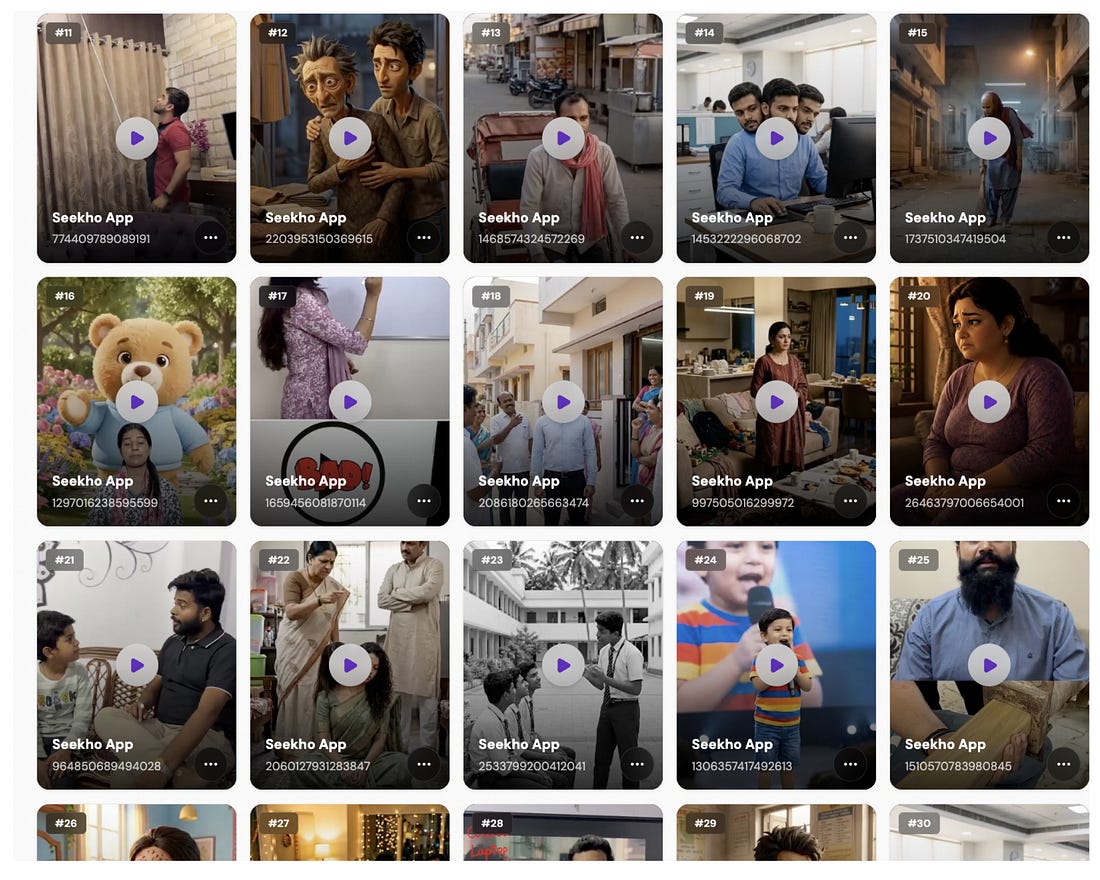
Competitor research: Seekho uses the platform differently. Rather than output, they focus on input - tracking over 110 competitor Meta ad accounts daily to identify winning marketing angles before committing to creative production. The competitive intelligence layer, often treated as a separate problem, becomes part of the same workflow.
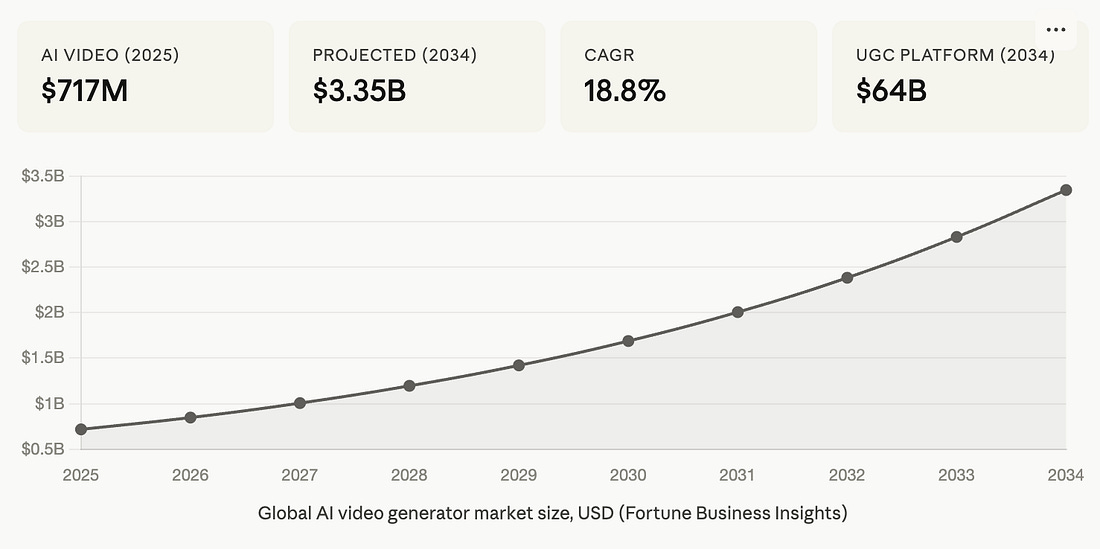
Three companies, three different use cases. The common thread: the constraint they removed was not budget or talent. It was throughput. Section 08 - Where This Goes From Here The creative production bottleneck is not a new problem. What is new is that the infrastructure to solve it properly at the speed and volume that performance marketing actually demands is only now becoming available. The global market for AI video generation is tracking from $717 million today toward $3.35 billion by 2034. That growth is not driven by novelty. It is driven by a real gap between what marketing teams need to produce and what traditional methods can deliver. The companies that figure out the full workflow layer not just video generation, but the intelligence, iteration, and deployment stack on top of it are building something that looks less like a creative tool and more like core marketing infrastructure. We are early enough in that build that the category is still being defined. That is both the risk and the opportunity. If you want to see how Surge Growth approaches this in practice Venture Unlocked covers India’s VC and founder ecosystem with a research-first editorial lens. This piece was produced in collaboration with SurgeGrowth. Research and editorial views are the author’s own. Shubham Bopche - Editor
Venture Unlocked is free today. But if you enjoyed this post, you can tell Venture Unlocked that their writing is valuable by pledging a future subscription. You won't be charged unless they enable payments.
|








No comments:
Post a Comment