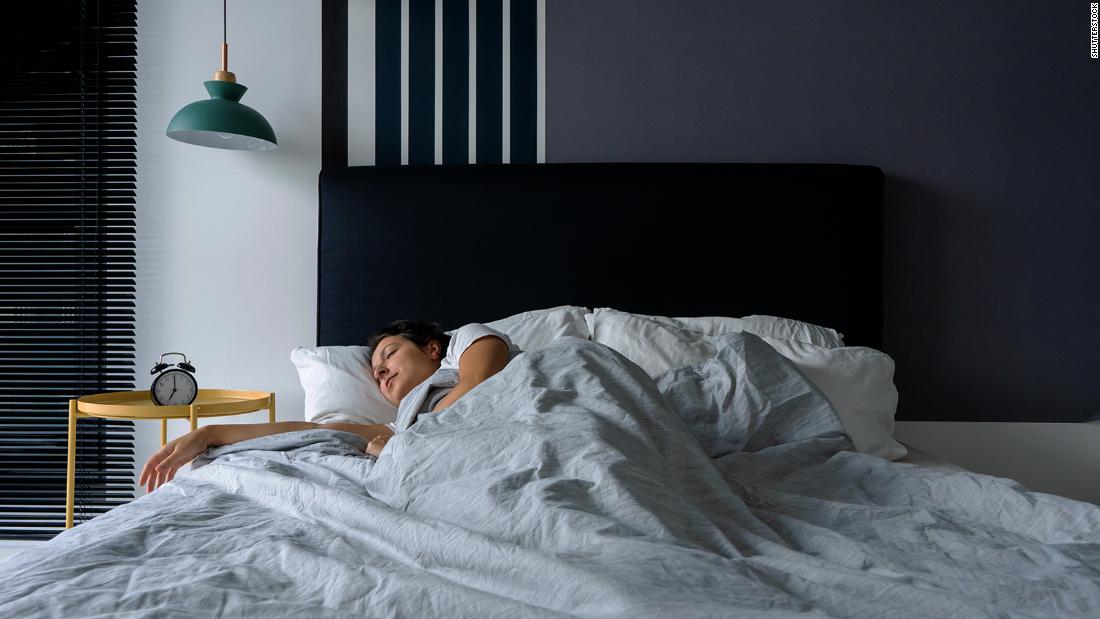
Improve sleep quality to ease stress and boost your mood.

Welcome back. In Part III, we looked at how daily exercise like walking can help keep you calm and upbeat. Another benefit of getting that heart pumping is that, at the end of the day, it improves sleep quality. See how this all connects? |
A better snooze eases stress and boosts your mood. Sound sleep also feeds creativity and cognitive function, which means you'll be better able to problem-solve and pay attention when your stress signals get triggered.
A tired brain doesn't work well, sending less blood flow to the frontal lobe. This affects executive functions such as compassion, the ability to handle conflicting perspectives and rational judgment.
Poor sleep can also make it much more difficult to cope with emotions. "It turns out we lose our neutrality. The ability of the brain to tell what's important is compromised. It's as if suddenly everything is important," said Dr. Talma Hendler, a professor of psychiatry and neuroscience at Tel Aviv University, speaking about a 2015 study she conducted on sleep and emotions. Other studies have linked depression, anxiety, risk-taking and aggression to sleep disorders in children and adults. Adults need at least seven hours of sleep per night for optimal health, but over a third of American adults aren't getting enough on a regular basis, according to the US Centers for Disease Control and Prevention. Set yourself up for a peaceful night's rest by establishing good sleep habits: - Go to sleep and wake up at consistent times.
- Avoid exercising too close to bedtime.
- Avoid stimulants such as nicotine or coffee starting midafternoon.
- Alcohol is also a no-no.
- Keep your room dark and cool.
- Unwind with a warm shower or listen to soothing music.
|
|
|
Did you know that the quality of your breathing directly impacts the quality of your life? The way you breathe impacts heart rate, blood pressure, stress response and even your brain state. And, yes, you can even leverage your breathing for better sleep, said Dana Santas, a breathing, mobility and mind-body coach in pro sports. The act of breathing is a voluntary movement you can control, she said. Try this breathing exercise by Santas, and place your hands on your ribs to monitor and guide their movement. |
|
|
It's easy to get caught up in social media scrolling right before it's time to call it a day. Before you know it, you have unwittingly blown your healthy bedtime goal of seven hours of sleep. If you're trying to unwind with bedtime procrastination, think again. "We know that just mindlessly scrolling and not really interacting in a meaningful way actually increases our stress as opposed to reducing it," said Vaile Wright, senior director of health care innovation at the American Psychological Association. Staying up late could lead to sleep deprivation, and the blue light emitted from screens can affect sleep quality. That combination impacts both productivity and overall health. Instead: Transition to sleep physically and mentally, said Dr. Rajkumar Dasgupta, assistant professor of clinical medicine at the University of Southern California Keck School of Medicine in LA. Make the bedroom a screen-free zone. Once you're in bed, engage in deep breathing, meditation or yoga. And during the day, strengthen boundaries and schedule time for yourself, Wright suggested. This will help you from feeling the need to reclaim time in the wee hours. |
|
|
| self-care pick of the week |
| |
If you've smartly checked your smartphone at the bedroom door, go with an old-school alarm clock to help you wake up. Our partners at CNN Underscored, a product reviews and recommendations guide owned by CNN, like the Jall Wooden Digital Alarm Clark. The simple, modern design is eye-catching, and the alarm isn't too jarring. |
|
|
Let's check in on your daily 10-minute walking routine from the last newsletter. If you kept up with it, bump that up to 20 minutes a day. Remember to make this a moving meditation by using your five senses to observe how your surroundings change on your daily route. And tell us your strategies for staying motivated at stressless@newsletters.cnn.com! If you haven't kept up the routine, try again. This week, also pay attention to your breathing patterns. Every day, practice Santas' 90-second routine that helps train you to breathe better while alleviating stress. Become more intentional with every breath you take. Quick recap: Formulate a plan for good sleep hygiene. A pre-sleep routine combining deep breathing and stretches fosters good rest. Break free of counterproductive late-night screen time. Become aware of how you breathe; practice the expert routine to develop a better breathing pattern. |
|
|
| ® © 2025 Cable News Network. A Warner Bros. Discovery Company. All Rights Reserved.
1050 Techwood Drive NW, Atlanta, GA 30318 |
| |
|
|
| |
|






No comments:
Post a Comment